50cc vs. 125cc Scooters: Forget Speed, Analyze
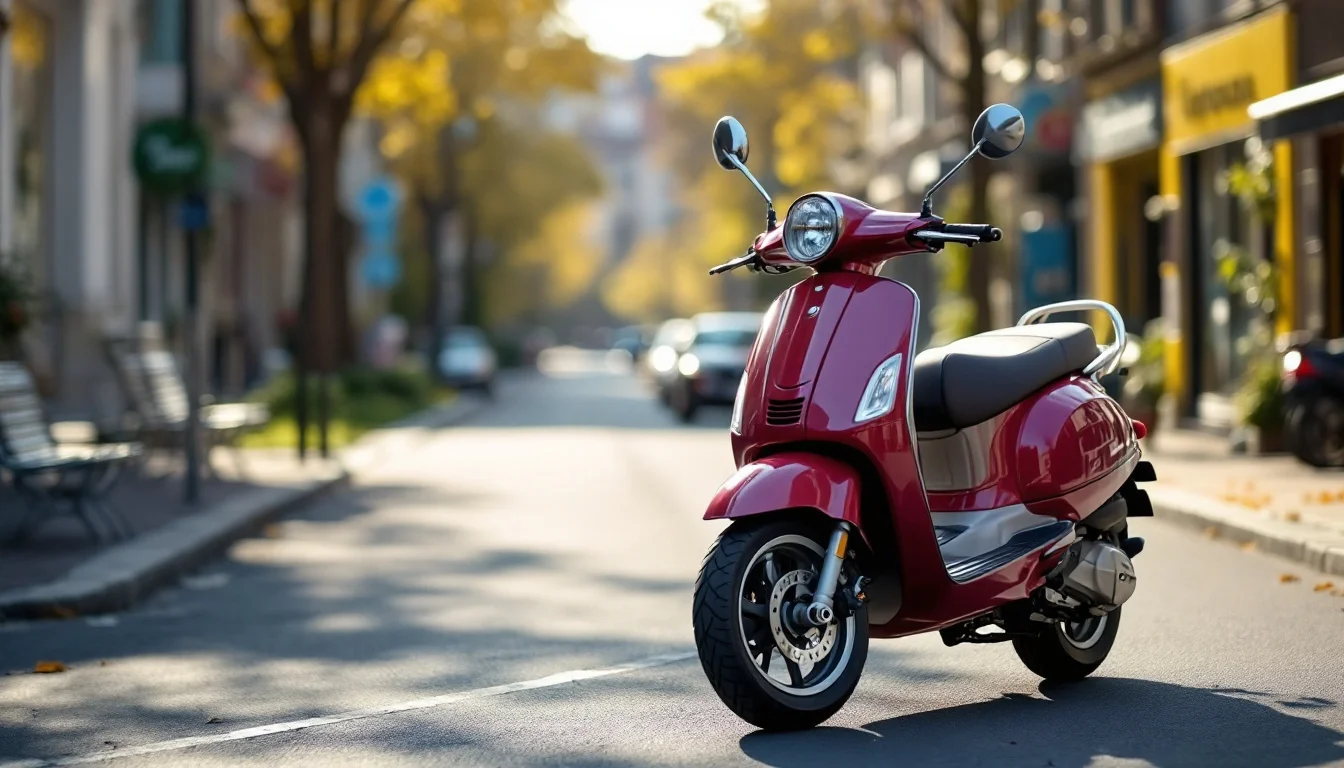
In the city, the idea that a larger engine displacement automatically offers a better riding experience dies hard. However, the reality of urban commuting has fundamentally changed in recent years. According to the Scoot-Elec buying guide, the terms 50cc and 125cc historically stem from internal combustion engines. Today, particularly for electric scooters, they serve mainly to classify an overall performance level.
This level determines the machine's power and top speed, rather than corresponding to any actual physical engine displacement. Buying a scooter is no longer just about wanting to go faster. It requires a precise understanding of your future ride's spatial footprint and a careful look at its technical capabilities. Faced with constant traffic jams, what does the modern commuter actually need?
Key Takeaways
- Performance redefined: The terms 50cc and 125cc now designate power classes, which is especially crucial when choosing an electric model.
- The urban ceiling: A 50cc-equivalent two-wheeler is technically sufficient in dense city centers packed with speed limits and traffic lights.
- The mileage tipping point: Stepping up to a 125cc-equivalent model is highly recommended for daily commutes exceeding 20 to 30 kilometers.
- Ergonomics as a priority: The presence of an automatic transmission dictates true comfort during frequent stop-and-go traffic.
The City Center: Why Do 50cc Scooters Rule Dense Urban Areas?
The Perfect Match for 30 km/h Zones
Modern urban environments impose a stop-and-go riding rhythm that makes theoretical top speeds completely useless on a daily basis. By design, a 50cc-equivalent electric scooter is technically limited to 45 km/h. While this restriction might seem like a drawback at first glance, it actually becomes a strategic advantage when navigating dense city centers.
This type of scooter is designed exclusively for the city, and its performance is more than adequate for a dense urban environment. In these highly congested areas, daily traffic jams, red lights, and 30 km/h speed limits are the norm. Having a motor capable of hitting 90 km/h provides absolutely no time-saving advantage between two gridlocked roundabouts.
Agility and Topographical Limits
Beyond the question of top speed, overall agility is what truly matters when it comes to weaving effectively through traffic. The 50cc-category scooter stands out for being lightweight, nimble, and fundamentally economical to run. It is ideally suited for very short commutes as well as quick weekday errands.
However, this lightweight nature comes with strict mechanical and topographical constraints that shouldn't be ignored. This category is specifically designed for solo riding on flat terrain. The chassis and power reserves of a 50cc scooter are absolutely not built to regularly carry a passenger, nor to climb long, steep hills without experiencing a significant drop in speed.
Evaluating Your Real Range
In a nutshell: under 20 km/day in dense areas → 50cc; over 20-30 km/day or on roads with 70 km/h limits and above → 125cc.
The Criteria for Choosing
To settle this debate without getting distracted by glossy sales brochures, analyze the real-world constraints of your route. Several variables will guide your choice.
- The 20-kilometer threshold: The geographical tipping point is clear. A 125cc-category scooter is highly recommended if you cover more than 20 to 30 km a day. Below this threshold, the extra cost of the machine is hard to justify through time saved.
- Topography and load: Nominal power really proves its worth depending on the weight being carried. A 125cc naturally becomes the better choice if you need more power and responsiveness for accelerating, or if you occasionally carry a passenger over medium distances.
- The prevalence of fast roads: If your commute takes you outside of 30 km/h zones, the game changes. If your route forces you onto roads with 70 or 90 km/h limits, a more powerful motor becomes a safety necessity.
Power Reserves for Peripheral Roads
Merging into fast-moving traffic with a machine that struggles to hit 45 km/h poses a definite risk. It is in this specific context that the larger motor reveals its fundamental utility.
A 125cc-equivalent electric scooter generally has the capacity to reach speeds of 70 to 90 km/h, depending on the specific model. This extra reach guarantees an essential safety margin for smooth overtaking on secondary roads and makes merging onto fast peripheral routes much easier.
Comparison Table: 50cc vs. 125cc
| Feature | 50cc Equivalent | 125cc Equivalent |
|---|---|---|
| Top speed | 45 km/h | 70 to 90 km/h |
| Ideal use | City centers, short commutes | Over 20-30 km/day, ring roads |
| Passenger | Designed for solo riding | Suitable for medium distances |
| Budget and maintenance | Fundamentally economical | Higher purchase price, similar maintenance |
Ergonomics and Efficiency: Surviving Frequent Stops
CVT Transmission vs. Urban Fatigue
In an endless traffic jam, physical and nervous exhaustion doesn't come from the speed itself, but from the continuous repetition of the same driving inputs. The major advantage of urban scooters lies in their automatic CVT (Continuously Variable Transmission). This mechanism completely eliminates the clutch and manual gear shifting.
Operation is boiled down to its simplest form: you just twist the throttle to go, and squeeze the brakes to stop. The CVT system handles gear ratios on its own in real time. This automation delivers perfectly smooth and predictable acceleration, making the learning curve incredibly flat and allowing you to keep your full attention focused on the road.
The Financial Impact of Stop-and-Go Riding
The constant cycle of stopping at red lights and accelerating away puts a massive strain on the propulsion system. In built-up areas, these urban driving cycles make fuel or energy consumption absolutely critical.
A scooter with poor urban efficiency quickly drives up the direct cost of your daily commute. This is one of the key reasons why energy efficiency during these stop-and-go phases must be scrutinized before making a purchase.
The Role of the Floorboard and Seat
The ergonomic accessibility of the machine is a vital criterion for tackling the city. A moderate seat height allows the vast majority of riders to easily plant both feet flat on the ground during a sudden stop. Real-world ergonomics and seat heights vary between models; it is always advisable to sit on the vehicle prior to purchase to ensure it feels comfortable.
Furthermore, when combined with a flat floorboard, this low seat height makes hopping on and off a breeze. The utilitarian design of this floorboard is often enhanced by under-seat storage and hooks on the front apron. This setup drastically optimizes daily practicality for carrying small bags or groceries.
The Extra Cost of Buying a 125cc
Opting for a larger motor is immediately felt on the final bill. The purchase price of a 125cc scooter is, on average, noticeably higher than that of a 50cc. In the electric sector specifically, this price gap is justified by the larger battery and significantly beefed-up motor required to sustain higher speeds.
FAQ: Technical Differences and Maintenance
What is the real difference between a moped and a scooter?
A moped (or "cyclomoteur") is technically restricted to 45 km/h with a motor not exceeding 50cc (or 4 kW for electric models). The term "scooter" primarily refers to the structural design and architecture of the vehicle.
Is maintaining a 125cc electric scooter more expensive than a 50cc?
Unlike internal combustion engines, the size of an electric motor doesn't significantly inflate your mechanic's bill. With electric models, both the 50cc and 125cc categories share a much simpler maintenance schedule compared to their gas-powered counterparts, although they still have traditional wear-and-tear parts (tires, brake pads, bearings, and the battery itself). While there are no more traditional oil changes, most models still use a transmission (belt, chain, or gear) that may require upkeep or gear oil. The main practical difference boils down to charging frequency: a 125cc logically consumes more energy, but it generally houses a much larger capacity battery to compensate.
Conclusion: Making the Smart Choice
Ultimately, choosing the ideal machine comes down to a rigorous analysis of your local infrastructure and your daily route, rather than a simple quest for the fastest model. Between the life-saving hyper-agility of a 50cc-equivalent on gridlocked streets and the reassuring cruising power of a 125cc for extra-urban commutes, each technology serves a highly specific topographical purpose. The best approach now is to meticulously map out your typical commute and insist on a full test drive during rush hour to validate your choice.