Scooter Acceleration Loss
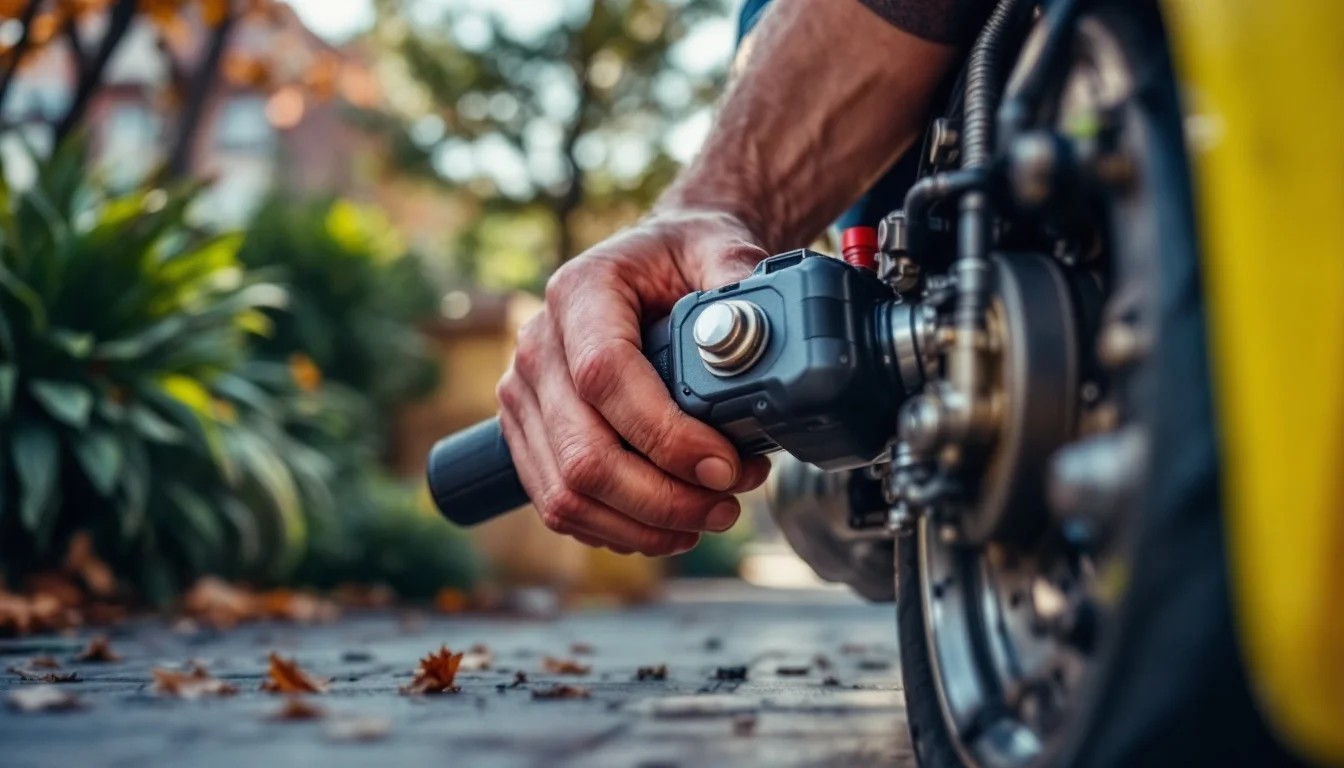
You're at a red light, the road clears, you confidently twist the throttle... and your scooter hesitates sluggishly before moving off. This sudden loss of acceleration is a common issue for urban riders. Faced with this sluggish behavior, the first instinct is often to point the finger at the engine block. Many riders mistakenly diagnose poor performance as a dying engine, a dirty carburetor, or a faulty spark plug. However, the loss of power off the line or the inability to climb hills is often directly linked to the physical wear of the variator roller weights, as highlighted by a specialized guide from Gefor Trading.
This misdiagnosis is costly in both time and unnecessary replacement parts. The true heart of your two-wheeler's pep isn't always found in the combustion chamber; it often lies right inside the transmission case. Servicing these small, cylindrical weights is likely the mechanical fix with the best return on investment for bringing your machine back to life.
Key Takeaways
- Performance drops usually stem from worn roller weights, not engine failure.
- Worn rollers develop flat spots, causing jerking and rough acceleration.
- Lighter rollers don't automatically make a scooter faster.
- The belt and rollers should ideally be replaced together, with the wear limit typically falling between 19,300 and 24,100 km (under normal use).
CVT Anatomy: What Do Roller Weights Actually Do?
To understand why a simple cylinder weighing just a few grams dictates the behavior of your entire two-wheeler, you need to look under the transmission cover. The variator is the front drive pulley, bolted directly onto the engine's crankshaft, operating within a continuously variable transmission (CVT) that keeps the engine in its optimal powerband.
This ingenious system replaces the traditional gearbox. The CVT relies on small, high-friction components (the roller weights); when they begin to fail, the entire dynamics of the transmission degrade. But how do they actually work? It all comes down to centrifugal force.
The Principle of Progressive Gearing
As you accelerate, the crankshaft spins faster. Inside a CVT variator, centrifugal force flings the roller weights outward along their ramps. As they move out, the rollers push the two pulley halves closer together as engine RPM increases. This alters the gear ratio—the equivalent of upshifting, explains a maintenance guide from Fresh Parts.
To visualize the phenomenon, think of a bicycle's derailleur. At startup, the belt rests near the center of the variator (the small chainring), providing plenty of torque. When the rollers slide up their ramps, they squeeze the pulleys together, forcing the belt to ride higher toward the outer edge (the large chainring), which translates to top speed. If the rollers don't slide perfectly, this seamless transition is compromised.
Diagnosis: Why Won't My Scooter Accelerate Anymore?
Isolating the source of a power loss requires a methodical approach. Transmission-related symptoms are very specific to what you physically feel in the saddle and the audible behavior of the engine revs. The secret lies in observing the smoothness of the power delivery. Rollers in good condition remain perfectly round and wear evenly, allowing the variator to shift up smoothly.
Diagnostic Table
To help you pinpoint the exact transmission fault without blindly tearing everything apart, here is a cross-reference table matching your riding sensations to the mechanical condition of the components.
| Riding Sensation and Scooter Behavior | Probable Mechanical Cause |
|---|---|
| Very high RPMs with little forward progress (the engine "screams" without accelerating) | Rollers are too light, the belt is worn, or the clutch is slipping. |
| Slow, sluggish acceleration; struggles to build speed | Rollers are too heavy, or the variator shifts up too early. |
| Uneven acceleration, flat spots, or harsh jerking as speed increases | Flat-spotted rollers, incorrect roller size, or a dirty variator. |
The presence of jerking is the telltale sign of a misshapen component. A carbon-fouled engine will bog down consistently, whereas a damaged drivetrain component will momentarily jam the pulley expansion before suddenly giving way. This creates that characteristic judder in the power delivery to the rear wheel.
Tuning and Weight: The "Lighter is Faster" Myth
As soon as a rider looks to improve their urban machine's throttle response, the first piece of parking-lot advice they hear is to install extremely light roller weights. This shows a fundamental misunderstanding of CVT dynamics. Roller weight primarily dictates when the variator shifts to a higher gear ratio. It acts as a dynamic balance point, not a magic slider for absolute performance.
The Dynamics of Roller Weight
The law of physics here is strict: lighter rollers generally make the engine rev higher during acceleration and hold those higher RPMs longer. This mostly benefits setups that only produce true power at high revs. Conversely, heavier rollers force the variator to shift up earlier, typically resulting in lower cruising RPMs and a smoother ride.
Lighter does not automatically mean faster. In reality, excessively light rollers will make the engine scream without any actual speed gain, because the centrifugal force isn't strong enough to push the belt out. On the flip side, overly heavy rollers result in sluggish takeoffs and cause your speed to drop off much faster when facing headwinds or riding uphill.
Tailoring the Tune to Your Engine Size
Your tuning strategy is intimately tied to your two-wheeler's underlying mechanics. Here are some general guidelines based on common setups:
- Stock 50cc Scooter: The factory weight is usually ideal. It should only be altered if you notice a genuine performance issue.
- With a Sport Exhaust: Opting for a slightly lighter weight helps you tap into the new, higher powerband provided by the aftermarket pipe much faster.
- On a 70cc Kit or Larger: The ideal choice heavily depends on your overall build. The best method is to start with a medium-weight set and make small, incremental adjustments.
When Should You Replace the Rollers? (And the Importance of the Belt)
The transmission of a scooter operates in an extremely demanding environment. Confined within a metal casing, it constantly absorbs engine heat and abrasive friction. Maintaining this system shouldn't only happen when wear symptoms become debilitating in the middle of traffic, but rather according to a strict preventative schedule.
Specific Intervals and Paired Maintenance
There is a golden rule in scooter mechanics: you never install brand-new rollers alongside an old belt, and vice versa. As a general rule of thumb, both the CVT belt and variator rollers should be replaced between 19,300 and 24,100 km. This mileage is an upper limit—under heavy urban use involving constant stop-and-go traffic (traffic lights, gridlock), that replacement window can arrive much sooner.
Why the strict requirement to change the belt at the same time? Heat and dust gradually harden the CVT belt until it begins to crack. A hardened, glazed belt loses its grip on the pulleys. Even with perfectly round, brand-new rollers, if the belt is slipping deep inside the variator, power transfer will be severely hampered. Servicing the entire CVT housing at once ensures even wear across all components.
Practical Guide: Replace the Rollers Yourself or Go to a Shop?
Cracking open your transmission case for the first time can be intimidating, but it is an accessible DIY task. Tuning or replacing the components can be done at home if you work carefully and use the correct tools. However, there are a few pitfalls waiting to trap the amateur mechanic.
Common Ordering Mistakes
The first mistake is often made before a single tool is even picked up. Roller size depends on the type of variator, not just the brand of the scooter. You must verify the part number or personally measure the diameter and width of your stock rollers. Dimensions vary wildly. Roller sizes are typically listed as diameter × width in millimeters (e.g., 16x13). Installing the wrong size will instantly jam the variator.
Workshop Best Practices
Once you have the parts in hand, discipline during assembly is essential. Here is the recommended workflow:
- Strict Visual Inspection: During teardown, the removed rollers must be inspected for flat spots, cracks, and dirt buildup, and then replaced with a complete set of identical rollers.
- Weight Consistency: Never mix rollers of different weights. While it might seem to work momentarily, it causes erratic shifting and accelerated wear. Always use a full set of identically weighted rollers.
- Incremental Tuning: If you are looking to fine-tune your ride's behavior, it's best to adjust the roller weight in small steps of about 0.5 to 1 gram per roller. Larger jumps make it too difficult to analytically gauge the difference.
- Secure Reassembly: The final reassembly of the drive pulley must be done using a torque wrench set to the manufacturer's specified values.
If you have any doubts about the assembly process, the order of the washers, or specific torque settings, it is highly recommended to hand the job over to a professional mechanic to avoid damaging the transmission or the crankshaft.
Conclusion
Understanding the impact of variator rollers radically transforms the riding experience of a combustion-engine scooter. Far from being mere chunks of plastic and metal, these tiny components single-handedly calibrate all the energy transferred from your crankshaft to the city asphalt. As long as we ride with CVT transmissions, knowing how to spot wear, resisting the temptation of overly light rollers, and adhering to strict torque specs will remain the best way to preserve your machine.