Technical Motorcycle Base Layers
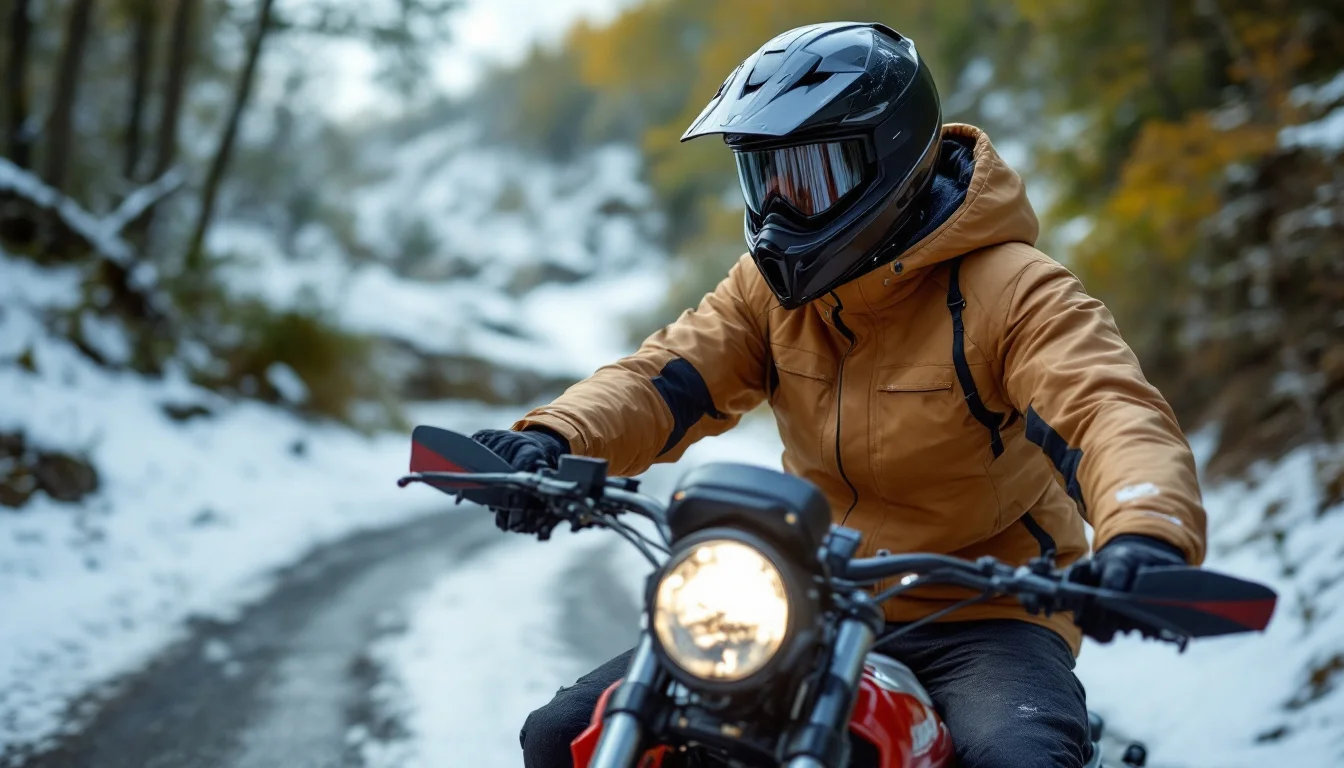
You've just invested in a state-of-the-art motorcycle jacket, complete with waterproof membranes and strategically placed ventilation zips. Yet, during your daily urban commute, you arrive at your destination either drenched in sweat or shivering from the cold. The culprit is often hiding right under your jacket: your everyday t-shirt.
Urban commuters and new riders alike often underestimate the importance of their base layer. According to the guide "What to wear under motorcycle gear" by the specialist site ymga.ca, cotton traps moisture once wet and stays stubbornly damp. It becomes uncomfortably clingy in hot weather and acts as a powerful cooling agent when temperatures drop.
In practical terms, wearing regular everyday clothing significantly undermines the technical properties of your protective gear. Ditching cotton in favor of synthetic fibers is a highly effective way to improve your comfort while riding your motorcycle or scooter.
Key takeaways:
- Base layers manage moisture, prevent bunching, and keep armor in its proper place.
- Cotton traps sweat, which neutralizes the cooling effect of jacket vents.
- A thin layer handles sweat far better than bare skin in the summer.
- Bulking up with thick layers in winter can shift protective armor out of position.
The Science of Microclimates: The 3 Vital Functions of a Base Layer
Engineering beneath the jacket
What happens between your skin and your jacket is a matter of genuine microclimate management. Base layers must perform three essential functions to ensure your riding gear works effectively: manage body moisture, prevent fabric from bunching up under other clothes, and help protective armor stay securely in place while you move.
Standard streetwear consistently fails on all three fronts. An ordinary t-shirt will quickly become soaked with sweat, ride up your lower back due to your riding posture, and create uneven bulk that restricts arm mobility.
The mechanics of moisture-wicking
The primary role of technical gear isn't to generate heat, but to move water. A lightweight base layer actively wicks sweat away from the skin and dries exponentially faster than cotton.
This wicking process acts as the actual engine for your motorcycle jacket. Gear manufacturers integrate exhaust vents and frontal intakes with a specific goal in mind: to create an airflow that will carry away water vapor. If a technical base layer pushes this sweat to the outside of the fabric, the air rushing through the jacket can dry it instantly. Conversely, if sweat remains trapped against your skin in a spongy cotton shirt, your jacket's vents will simply blow cold air onto a wet garment, completely neutralizing any ventilation benefits.
Thermal Architecture: Summer vs. Winter Strategies
Summer riding: the long-sleeve paradox
It's only natural to want to shed layers when the temperature spikes in urban traffic. However, riding in just a t-shirt beneath a vented jacket is a physiological mistake. Provided there is adequate ventilation, a thin base layer can actually feel cooler than bare skin beneath your gear, simply because it manages sweat better and prevents chafing or hot spots.
In the height of summer, direct contact between a motorcycle jacket's inner lining and your bare skin creates friction. By instantly absorbing moisture, long-sleeved technical fabrics create a much larger surface area for evaporation. This process dissipates body heat and prevents the jacket from sticking to your arms, ensuring an active cooling sensation the moment your bike gets moving.
The winter approach: layering and safety
When temperatures plummet, the usual reflex is to throw on a bulky hoodie under your jacket. This approach not only compromises thermal comfort but, more importantly, the rider's passive safety. In cold weather, the best strategy is to layer up without adding unnecessary bulk.
Stacking thick garments until your jacket is essentially stuffed tight severely restricts your range of motion. Even worse, this unplanned bulk can shift your armor out of place. Protective inserts (shoulders, elbows, back) are designed to contour precisely to your joints. Depending on the jacket's fit, a heavy build-up of wool or cotton risks pushing these protectors out of alignment, meaning they might not absorb impact optimally in the event of a crash. A thin thermal base layer retains heat close to the body while leaving the jacket's armor exactly where the engineers intended it to be.
Durability and Impact: Why Avoid Everyday Fashion on a Motorcycle
Buying motorcycle-specific base layers is often seen as an unnecessary expense. Yet, beyond physiological benefits, it represents a genuine choice in favor of eco-design and sustainability, standing in stark contrast to the dominant disposable fast-fashion model.
The environmental cost of everyday clothing
The fragility of regular clothes when subjected to the rigors of riding contributes to a harmful replacement cycle. On a macro level, the global impact of the European textile sector generates roughly 5.6 million tons of CO₂ emissions annually—equivalent to one million gas-powered cars. This figure covers the global fashion industry and highlights the sector's environmental footprint. On a personal level, fast-fashion cotton t-shirts quickly stretch out and wear down under the stress of a heavy motorcycle jacket, driving a cycle of frequent replacement.
The proven longevity of technical fibers
Conversely, motorcycle base layers are designed to withstand constant friction, the high acidity of sweat, and intensive washing. Test feedback published by Motor Cycle News (MCN) illustrates this durability: the DXR Warmcore was worn for nearly a year, covering 6,500 km and surviving 12 washes without losing its shape; the Zerofit Heatrub Move underwent a successful long-term trial; and the Alpinestars Ride Tech racked up over 16,000 km, earning a 5-star rating.
Riding with technical base layers is therefore a concrete act of sustainability. Instead of burning through multiple standard t-shirts a season due to the internal abrasion of jacket linings, riders invest in a single piece built to last, thereby breaking the cycle of textile waste.
Real-World Comparison: 3 Technical Approaches Validated by Mileage
The motorcycle gear market offers solutions tailored to every budget and season. Analyzing these tested and verified models helps map out what's currently available.
Analysis of benchmark models
| Model | Material composition | Advertised temperature range | Test feedback |
|---|---|---|---|
| Zerofit Heatrub Move | 50% polyester, 45% polypropylene, 5% polyurethane | -5°C to 12°C | Long-term test (Saffron Wilson) |
| DXR Warmcore | Hollow fibers and elastane | Versatile summer and winter use | ~1 year / 6,500 km / 12 washes with no loss of shape (Ali Silcox); price: approx. €18 top, €18 pants (prices at time of test) |
| Alpinestars Ride Tech | Polypropylene and elastane | Winter use | 16,000+ km, 5 stars (Michael Neeves); price: approx. €100 (down from €105, price at time of test) |
(Note: Prices reflect testing data at the time of publication and may have changed.)
Choosing based on your rider profile
For the budget-conscious urban commuter, the DXR approach proves that thermal technology doesn't have to break the bank. The Warmcore model uses hollow fibers paired with elastane to offer both summer and winter versatility. It's an excellent, cost-effective way to finally ditch cotton.
For the winter rider braving freezing temperatures, the Zerofit Heatrub Move Baselayer features specialized chemical engineering. Its composition targets an advertised optimal temperature range of -5°C to 12°C, ensuring thermal insulation without excessive bulk.
Finally, for the demanding motorcyclist or long-distance tourer, feedback on the Alpinestars Ride Tech confirms that the initial investment pays for itself over time. This type of base layer stands out as a rock-solid choice for maintaining comfort across multiple seasons.
Frequently Asked Questions (FAQ): Optimizing Your Base Layers
Is it better to choose a one-piece suit or a two-piece set?
The format of your base layer depends entirely on your daily usage. According to experts, the choice boils down to a one-piece suit—which proves to be the warmest by eliminating any air drafts at the waist—and a two-piece version, which remains by far the most practical. For an urban commuter who needs to change upon arriving at the office or manage frequent stops, separate tops and bottoms offer essential everyday flexibility, making bathroom breaks much easier as well.
Conclusion: A Comfort Tool to Combat Saddle Fatigue
The debate surrounding motorcycle base layers often overlooks the purely ergonomic side of riding. Beyond temperature management, preventing physical exhaustion is crucial. Bulky seams, metal hardware, or rough stitching can create agonizing pressure points after a few hours in the saddle.
Everyday jeans with their metal rivets, or t-shirts with thick shoulder seams, become literally painful under the weight of armor and a jacket belt. By opting for technical clothing featuring flat seams and zero hardware, riders can effectively delay their muscle fatigue threshold. Staying comfortable means staying focused on traffic, turning a simple base layer into a genuine asset for your concentration on the road.