Riding a Scooter Two-Up in the City
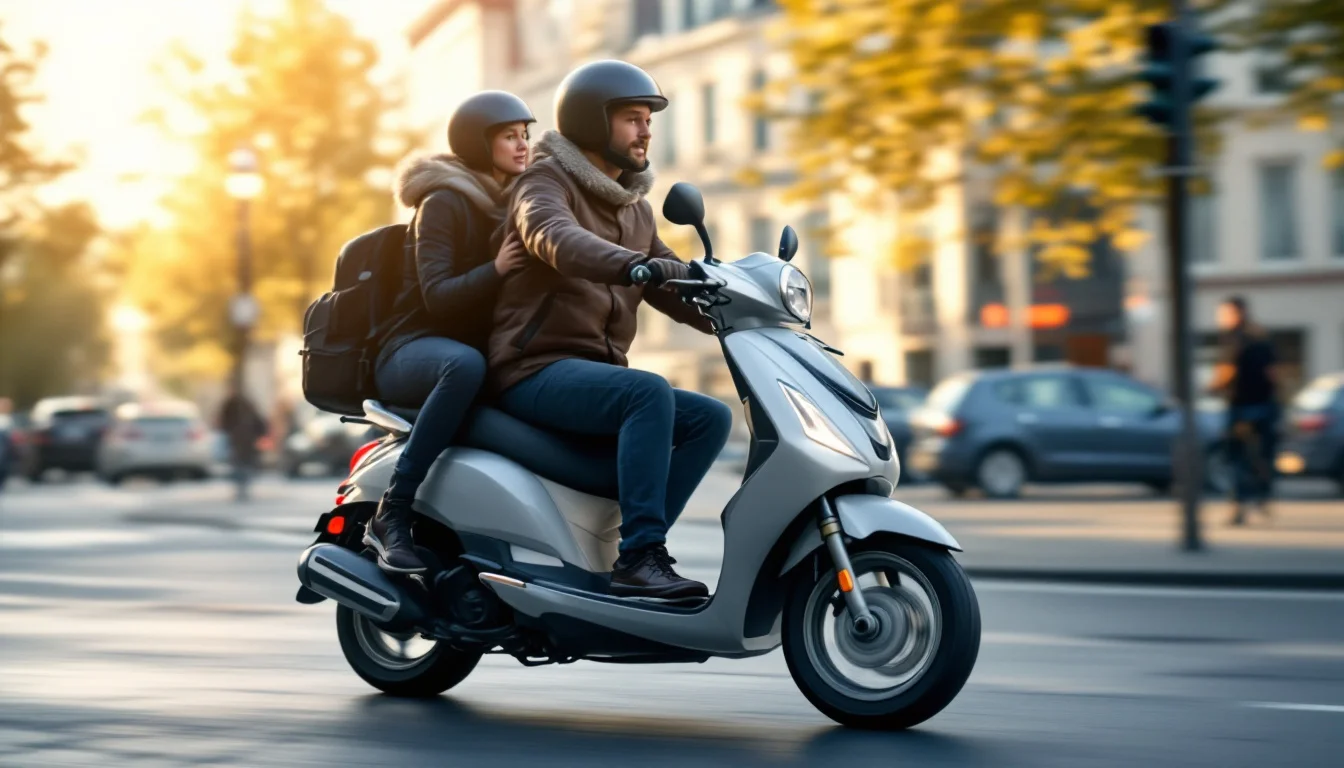
In the popular imagination, sharing a city commute often looks like a romantic, breezy ride down leafy avenues. The physical reality, however, is quite different. Taking a passenger on an urban scooter is about much more than just making room on the seat: it radically alters the dynamic architecture of your two-wheeler.
As an urban rider, you’ve likely felt that strange sensation at the first green light: steering that suddenly feels heavy, precarious balance at low speeds, or a noticeably longer braking distance. These symptoms aren't due to a lack of experience; they are the result of a mechanical shift.
Carrying a second person requires much more than just riding carefully. It demands precise mechanical compensations on your machine and a genuine adaptation of your riding reflexes. Whether you ride a nimble little scooter or a powerful maxi-scooter, understanding the dynamics of riding two-up allows you to master this new geometry and ensure your safety in the city.
Key Takeaways
- Suspension and tires: Increase rear preload and tire pressure to compensate for the extra weight.
- Lighting: Lower your headlight beam, which naturally points upward under the load.
- Boarding: Follow a strict sequence (kickstand down, brakes applied) to avoid a standstill tip-over.
- Braking: Adopt a two-stage braking technique (a gentle initial bite followed by firm pressure) to manage weight transfer.
Why Does a Scooter Become Less Nimble With a Passenger?
To understand how a scooter handles with a pillion, we have to look at the physical forces at play. According to the guide Better Riding: How to Ride with a Pillion by Bennetts/BikeSocial, adding a passenger shifts the combined center of gravity of the bike and rider upward and toward the rear.
The additional weight placed on the rear of the two-wheeler alters the machine's overall balance, creating a lever effect that unweights the front end.
Loss of Steering Authority
This shift in the center of gravity has immediate repercussions on your front-end geometry. With a passenger, the bike becomes less agile and is much more prone to understeer.
In practical terms, the front tire, which is no longer pressed as firmly against the tarmac by the vehicle's mass, loses some of its steering authority. When you turn the bars to dodge a manhole cover or navigate an intersection, the scooter will tend to run wide rather than dipping naturally into the corner.
Urban Inertia
The increase in total mass also changes the vehicle's overall kinetic energy. This extra weight extends braking distances and slows down suspension response.
In urban environments, where emergency situations (opening car doors, pedestrians stepping out) are frequent, this added inertia drastically shrinks your margin for error. The shock absorbers, already compressed by the static load, have less travel available to soak up potholes, resulting in an overall ride that feels sluggish and unresponsive.
How to Adjust Preload for Riding Two-Up
Before you even start the engine, a quick garage check is essential to restore the two-wheeler's natural riding stance. Expert recommendations focus on three critical chassis points that must be adapted.
First, it is highly recommended to adjust the rear suspension preload to compensate for the passenger's extra weight and preserve the bike's balance and handling. Increasing preload (often via a stepped collar or a dial) doesn't stiffen the spring itself; instead, it raises the rear of the scooter back to its original ride height. This keeps the suspension from bottoming out on every speed bump.
Second, you need to check your tire pressure and increase it if necessary to support the passenger's load. The exact specs to follow are those provided by the manufacturer in the owner's manual—they vary by model and should not be arbitrarily exceeded. Increasing pressure within the recommended limits stiffens the tire carcass and reduces heat buildup.
Finally, because the overall geometry has changed, the sag in the rear suspension forces the headlight beam upward: an adjustment is necessary if you plan to ride at night with a pillion. An uncorrected headlight will blind oncoming drivers while actually reducing your own visibility on the road.
| Mechanical Component | Effect of the Load | Required Corrective Action | Physical Risk if Ignored |
|---|---|---|---|
| Rear suspension | Sagging ride height, reduced suspension travel. | Increase spring preload. | Bottoming out on bumps, loss of traction. |
| Tires | Carcass deformation, overheating. | Increase pressure according to manufacturer specs. | Risk of overheating and carcass degradation, vague steering feel. |
| Headlight beam | Rear-end sag, altered beam angle. | Lower the angle of the headlight unit. | Blinding oncoming traffic, poor night visibility. |
How to Mount with a Passenger Without Tipping Over
The boarding process is critical. Scooters, particularly GT models and maxi-scooters, have a specific architecture where the total weight makes any lateral movement dangerous at a standstill.
The Pre-Ride Choreography
To avoid the dreaded standstill drop, the boarding protocol can be boiled down to a strict sequence:
- The kickstand remains down as a safety net.
- The rider mounts the seat, ideally on level ground, applies the front brake, and keeps both feet firmly planted on the ground.
- The passenger footpegs are folded out, and the passenger can finally get on.
- The kickstand is kicked up only once the passenger is comfortably settled.
- You are ready to depart.
Adapting Your Immediate Setup
Once in the saddle, your rearward field of vision is partially obstructed by your guest. Some riders readjust their left mirror to keep an eye on their pillion while riding. This quick hardware tweak allows you to monitor their comfort in the middle of heavy traffic.
Communication becomes the nerve center of a good ride. If you don't have a Bluetooth intercom, it's wise to agree on simple hand signals before you set off—for instance, two taps on the shoulder for "I need you to pull over," and a thumbs-up for "everything is fine."
Finally, anticipating movements is vital. In corners, encouraging the passenger to look over the rider's inside shoulder naturally aligns their body with the lean angle of the bike. This posture prevents the pillion from stiffening up or counter-steering with their own weight, thereby preserving the stability of the entire setup.
How to Brake and Corner Two-Up
Tuning your chassis isn't enough: the dynamics of city riding (frequent stops and accelerations, tight turns) demand a complete adaptation of how you handle the controls.
Two-Stage Braking
The braking system is subjected to the highest level of stress. Braking with a passenger is ideally done in two stages: a gentle initial bite to settle the bike, followed by firmer pressure as the weight transfers forward, and finishing with a progressive release to avoid any jerky movements.
This technique is dictated by weight transfer physics:
- The initial bite (gentle pressure): By lightly squeezing the lever(s), you initiate a controlled weight transfer toward the front.
- Loading the front tire (compression): This weight transfer presses the front tire firmly against the asphalt, massively increasing its contact patch and, consequently, its grip.
- The application (firm pressure): Once the tire is properly deformed and planted, you can apply maximum braking force without locking the wheel.
- The release (progressive let-off): Releasing the brakes abruptly would cause the front end to rebound, destabilizing the scooter.
Fluidity on the Controls
The most obvious indicator of clumsy riding is audible. If the rider's and passenger's helmets keep knocking together, it signals overly aggressive acceleration or braking: you need to soften your inputs on the controls. A feather-light, millimeter-perfect throttle hand is required to smooth out speed variations.
Lines and Anticipation
Tactically speaking, the loss of agility forces you to rethink your lines. The rider should adopt a late apex trajectory to improve visibility and buy crucial reaction time, all while maintaining a safety "bubble" of space around the motorcycle.
Diving late toward the inside of the corner allows you to stand the scooter up earlier on the exit. This technique minimizes the amount of time spent at maximum lean angle—the exact point where the combined weight of the two riders makes the machine most vulnerable to a loss of traction.
Carrying a Child Passenger
When carrying a child, ensure they wear a helmet, are tall enough to place both feet flat on the passenger footpegs, and can hold on securely.
Conclusion
Carrying a passenger in an urban environment completely rewrites the physical rules governing your two-wheeler. By adding a second person, the overall mass increases, extending braking distances and altering the center of gravity. It is therefore crucial to check the maximum payload defined by the manufacturer in the owner's manual before any two-up ride. Mastering weight transfer and making precise chassis adjustments remain absolutely paramount for keeping your shared commute safe and smooth.