Running Errands on a Scooter: The Physics of Loading and Luggage
Running errands on a two-wheeler is a staple of urban life. We've all tried to wedge a pack of water between our feet or awkwardly balance a stubborn bag on the seat. However, transforming your ride into a utility vehicle isn't something you can just wing on the curb. Poor weight distribution alters the machine's handling and can make the steering feel vague.
Gearing up properly is more than just a matter of everyday convenience; it's essential for ensuring riding stability. Forget makeshift solutions and hastily stretched bungee nets that snap at the first speed bump. This guide dives into the physics of a loaded two-wheeler. We'll look at how to assess your machine's actual cargo space, place loads in the right spots, and choose the right luggage extensions so you can ride with peace of mind.
Key Takeaways
- Analyze the geometry: The actual shape of the storage compartment matters far more than the volume listed on the spec sheet.
- Ban handlebar loads: Weight hanging from the handlebars can throw off your steering in corners.
- Lower the center of gravity: Heavy items should always be placed as close to the ground as possible, ideally on the flat floorboard.
- Opt for modularity: Adding luggage (top boxes, panniers) frees up vital space for the rider and protects fragile items.
The Myth of "Liters": Why Compartment Geometry Trumps Volume
When you check a two-wheeler's spec sheet at a dealership, storage space is always touted with a flattering metric. According to a technical guide published by Ampere (How much can you carry on an electric scooter), the storage volume of electric scooters is generally expressed in liters—a figure that gives a rough idea of daily utility but doesn't tell the whole story. Since this unit measures liquid volume, such a compartment won't necessarily swallow up your everyday solid items.
The Problem with Rigid Items
The main trap for users lies in the actual layout of the internal spaces. Curved compartments make storing flat items incredibly difficult: it is highly recommended to measure the diagonal width of the under-seat storage before buying the vehicle. A laptop, no matter how slim, will never bend to fit the rounded bottom of a compartment sitting above the rear wheel. Similarly, a standard full-face helmet is bulky: some scooters can fit one under the seat, others cannot; riders often have to choose between carrying a helmet, a bag, or groceries on any given trip.Mechanical Wear on Latches
Trying to work around these geometric limits often leads to very bad daily habits. The natural reflex when faced with a stubborn storage space is to use all your body weight to force the seat shut. A tight under-seat compartment forces you to press down hard: you should always check that the seat closes effortlessly, as a tight fit can wear out the hinge or damage whatever device is stored inside. It's better to accept the physical limits of the stock storage and adapt your packing method.The Handlebar Mistake: The Physics of Weight Distribution
Riding a two-wheeler relies on a subtle and constant balance of weight. Haphazardly altering this balance turns the slightest evasive maneuver into a real hazard. A common mistake made right outside the supermarket directly involves the cockpit.
The Dangers of Steering Pendulums
Hanging heavy plastic bags from the handlebars is a common mistake: the weight shifts in corners and can destabilize your steering. This unpredictable pendulum effect pulls the front end toward the outside of the curve, completely throwing off your trajectory. Many modern scooters feature hooks on the front apron or under the seat; it is advisable to reserve these strictly for light bags to keep the handlebars free for riding.The Rule of a Low Center of Gravity
To maintain safe handling, the loaded weight must remain centered and as low as possible. When transporting heavy groceries, it is recommended to place heavy bags (for example, 10 kg of rice or flour) flat on the floorboard and center the load between your feet to keep the center of gravity low. This technique plants the vehicle to the ground and stabilizes the entire machine on its suspension.Finally, arranging your cargo is subject to an absolute safety constraint, which is vital in dense urban environments. The load must never block access to the brakes or prevent your feet from touching the ground.
The following table provides a quick assessment of the best zone for each type of load:
| Loading Zone | Max Recommended Weight | Impact on Center of Gravity | Ideal Item Type | Safety Risk |
|---|---|---|---|---|
| Flat floorboard | Heavy (e.g., 10 kg) | Excellent (lowers the center) | Large bags, dense products | Low if well-centered |
| Apron hook | Very light | Minimal if item is short | Small soft bag | Knee interference |
| Handlebars / Grips | Zero | Negative (imbalance) | None (to be avoided) | Loss of steering |
| Under-seat storage | Medium | Neutral (centered mass) | Helmet, jacket, small bag | Hinge strain |
Top Boxes, Saddlebags, and Racks: The Best Luggage Extensions
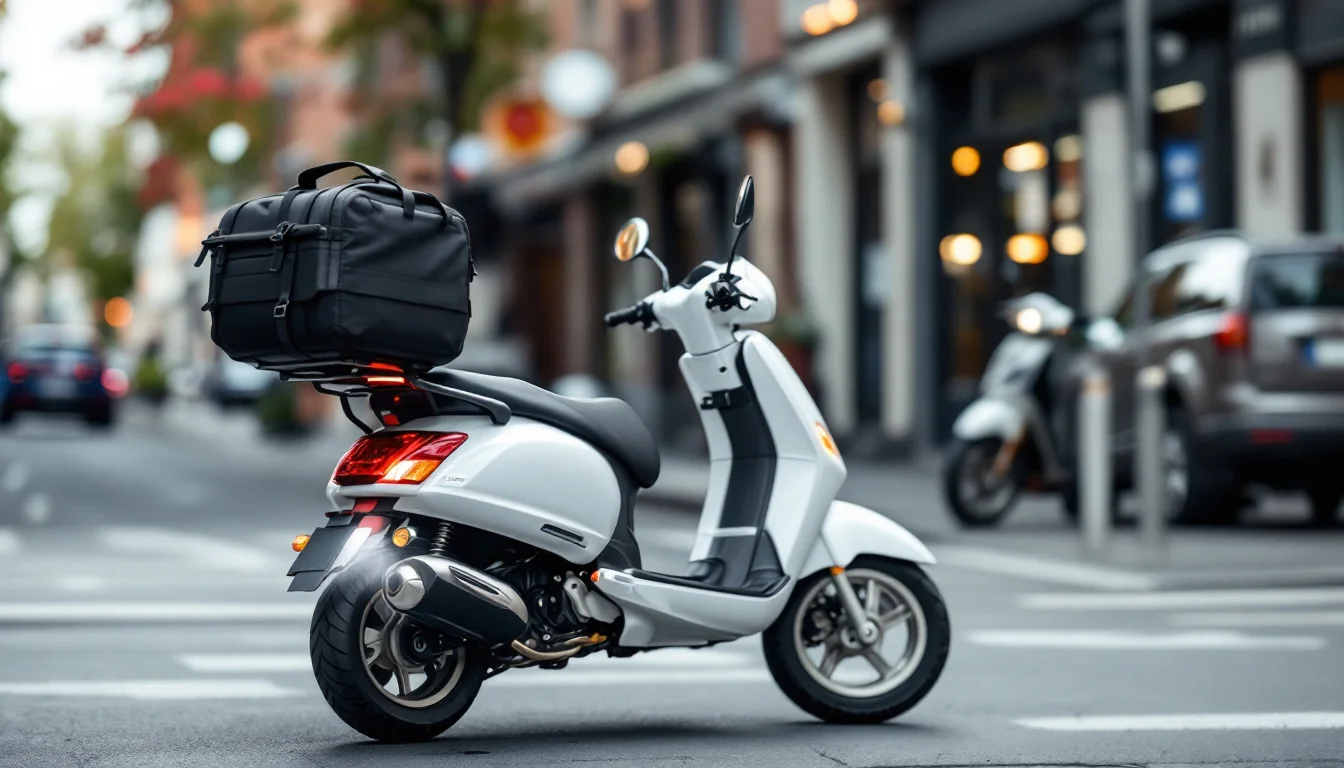
When the stock storage is full, adding peripheral equipment becomes essential. To gain space, it is recommended to add a rear luggage rack or a front basket, which increases carrying capacity without cluttering the vital foot area.
The Security of a Hard Shell
The top box remains the quintessential piece of urban equipment, particularly suited for computer gear that is vulnerable to impact. If the under-seat storage is too tight for a laptop, a rear rack or a top case is the most practical option. These boxes offer good structural protection. As a commercial example found on AliExpress (Wholesale Scooter Luggage Box), a universal top box for a two-wheeler/scooter typically features dimensions of 39x39x29 cm offering large capacity, a robust ABS+PP construction, as well as being "waterproof" and "lockable."The Flexibility of Soft Luggage
For those tackling the city on more rugged mounts or who need temporary modularity, soft luggage is incredibly effective. According to the Allroadmoto technical catalog (Motorcycle Luggage), there are saddlebags (sidebags, for example, the Enduristan Monsoon 3 model) and roll bags (rolltop, like the Enduristan Tornado 2 Pack Sacks XL) that feature two rows of cargo loops dedicated to ROKstraps for a particularly secure tie-down. This system pins the load against the machine and prevents any flapping at high speeds.The Essential Metal Rack
However, installing these side bags often requires a serious structural base to keep them from touching the rear wheel. Rear luggage racks with side supports are available for specific models, such as the Motoboxer for the KOVE 800X Pro & Rally, which entirely replaces the original luggage rack. Investing in this replacement frame guarantees maximum rigidity when transporting your groceries.Beyond the Scooter: When to Switch to a Cargo Bike for Big Grocery Runs
Even equipped with the best saddlebags and the largest top box, a standard motorized two-wheeler has strict physical limits dictated by its wheelbase. When the grocery list involves hauling massive loads that would jeopardize the machine's stability, it's sometimes wiser to rely on different logistics.
For these massive expeditions, other solutions are emerging in the city. Private electric cargo bike rentals are an excellent alternative for large grocery runs (bulk shopping). These specialized utility cycles, equipped with vast front buckets, allow you to move large volumes close to the ground with astonishing stability. Renting this type of equipment occasionally saves you from dangerously overloading your own scooter.
Frequently Asked Questions (FAQ): Luggage and Loading
Is a laptop safe from top box vibrations?
Although the hard shell protects against outside impacts, its overhanging placement behind the rear wheel axle amplifies suspension rebound. To protect sensitive electronic components, it is absolutely essential to slide your device into a very thick shock-absorbing sleeve before locking it in the rear case.Can you load only one side of the seat with a saddlebag?
Mounting a heavy load on just one side creates a permanent imbalance that will force the rider to continually correct their trajectory with their arms. To maintain healthy steering and avoid wearing out your bearings, always distribute your weight symmetrically between the left and right sides.Are apron hooks reliable on rough roads?
These open hooks are great for small items, but a hard jolt can pop the handle right out of its slot. Always make sure to cross the handles of your bag before hooking them in to maintain constant tension on the plastic.Conclusion: From Passenger Vehicle to Personal Utility Transporter
The days of making do with just a helmet and a lock under the seat are over. The growing sophistication of motorcycle luggage now allows you to transform the most compact commuter scooter into a true micro-utility vehicle built for everyday life. By mastering the geometry of your cargo spaces and applying the laws of physics to your payload, you reduce the risks to both your personal belongings and your own safety.